Color TV SINCE 1951
 On June 25, 1951, CBS broadcasted the first commercial color TV program, but almost everyone could not watch it on their black-and-white televisions. Even though this was the case, it was still a new and different way of living in this time period. The first TV program that had color was a called, “Premiere.” It was a small show which starred celebrities such as Ed Sullivan, Garry Moore, Robert Alda, and Isabel Bigley. Many of them hosted their own TV shows in the 1950’s. "Premiere" aired in the evening, from 4:35 to 5:34 p.m. but the show only reached four cities at the beginning. It aired in Boston, Philadelphia, Baltimore and Washington, D.C. At first, the colors did not equal the essence of true color in reality, but the TV show became a huge success.
A couple days after the TV show premiered, on June 27, 1951, CBS started to begin airing the first regularly-scheduled color television series. It was called, "The World Is Yours!” It was starring Ivan T. Sanderson, who was a very famous man at the time. Sanderson was a Scottish naturalist who had spent most of his life traveling and exploring the world with all its beauty and amazement and also collecting animals. Thus the program was about Sanderson discussing artifacts and animals from his travels. "The World Is Yours!" aired on weeknights from 4:30 to 5:00 p.m.
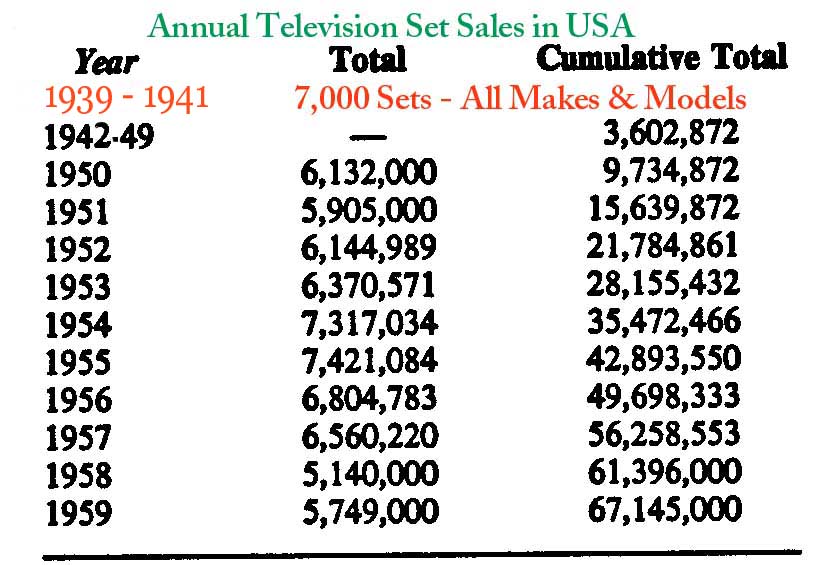
On August 11, 1951, about a month and a half after "The World Is Yours!" made its debut, CBS aired the first baseball game in color. The game was between the Brooklyn Dodgers from Brooklyn and the Boston Braves from Boston at Ebbets Field in Brooklyn, New York. This really boosted the invention of the color TV and helped make it more popular. Even though these early successes with color programming, with its realistic way of viewing, the adoption and creation of color television was slower than most would think. During the first six months of 1954, fewer than 8,500 color television sets were manufactured in the United States. There were only owned a color set and only a small percentage of network broadcasts that were even in color. During the entire 1954-1955 television season, for example, CBS only made nineteen color broadcasts. It was not until the 1960s that the public people began to buy color TVs in earnest.
1965 was the watershed moment for color broadcasting; there was still the small problem of the viewing public not having color television sets. According to NBC, there were only 2,860,000 color households in the United States as of January 1st, 1965 By July 1st, the number stood at 3,600,000 and on October 1st it was at 4,450,000 color sets. NBC’s figure for January 1st, 1966 stood at 5,220,000, an 85% gain over the January 1st, 1965 number but still only 9.7% of all television households. In the 1970s the American public finally started purchasing more color TV sets than black-and-white ones. They finally began to like the color and wanted it. However, sales of new black-and-white TV sets lingered in the 1980's.